

The Ultimate Guide to Choosing Stainless Steel Lunch Boxes: Expert Tips to Avoid Common Pitfalls
I. Material Selection: The First Line of Defense for Safety
Understanding Food-Grade Stainless Steel Standards
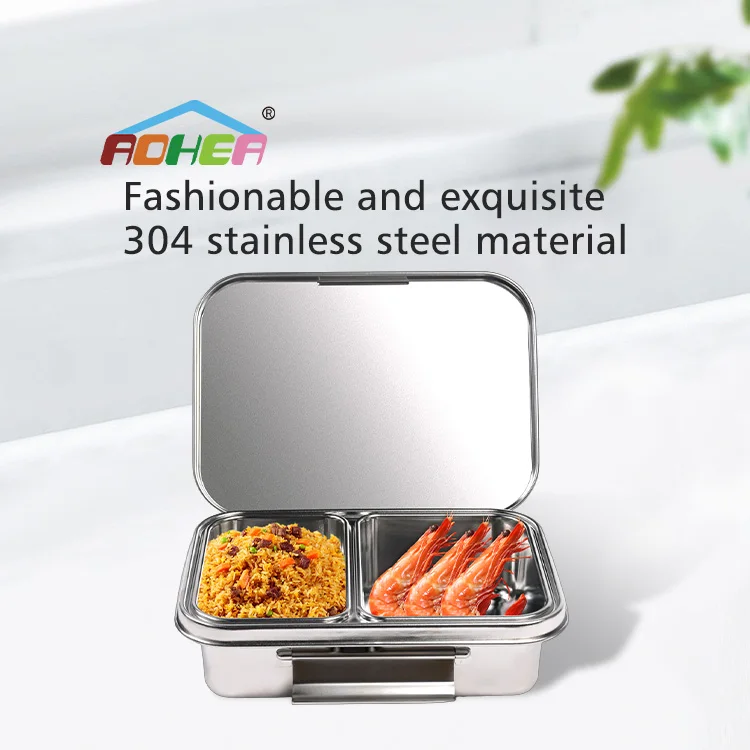
304 stainless steel (06Cr19Ni10) is currently the most common and cost-effective food-grade stainless steel material on the market, offering excellent corrosion resistance and safety. 316 stainless steel (06Cr17Ni12Mo2), as a medical-grade material, performs even better in resisting acids and alkalis, making it particularly suitable for users who frequently store high-salt or highly acidic foods.
Guide to Identifying Inferior Materials
Some products on the market use 201 stainless steel or 430 stainless steel to impersonate food-grade stainless steel. These materials not only rust easily but may also release harmful heavy metals during long-term use. Consumers can identify them using the following methods:
Check whether the product clearly labels the material type.
Use a magnet test (food-grade stainless steel has weak magnetism).
Observe the precision of the surface treatment.
II. Craftsmanship Quality: Details Determine the User Experience
Core Manufacturing Techniques
High-end products often use laser seamless welding technology to ensure smooth, joint-free interior walls, which are both aesthetically pleasing and prevent food residue buildup. Consumers should pay special attention to:
Whether the welds are smooth and even.
Whether the interior walls have burrs.
Whether the edges are rounded.
Sealing System Evaluation
High-quality silicone seals should feature:
A soft and elastic texture.
Food safety certification.
Maintain a good seal even after thousands of openings and closings.
It is recommended to conduct an inversion test to ensure no leakage.
III. Certification Standards: Authoritative Assurance of Safety
Domestic Mandatory Standards
GB 4806.9-2016 is the national standard for metal materials in food contact, which all products on the market must comply with.
International Certification Systems
US FDA Certification: Tests for heavy metal migration.
EU LFGB Certification: Passes rigorous migration experiments.
German GS Certification: Preferred for children's products.
IV. Tailored Purchasing: Matching Features to Needs
Daily Office Use
A single-layer lunch box with a capacity of 600-1000ml, used with an insulated bag, is sufficient for daily needs.
Special Needs Options
Insulation Needs: Vacuum-insulated models (confirm the insulation duration).
Meal-Separation Needs: Multi-compartment designs (ensure compartments are easy to disassemble and clean).
Outdoor Use: Thickened, impact-resistant models (minimum 0.8mm thickness).
V. Professional Usage and Maintenance Tips
Initial Use Preparation
Boil in diluted white vinegar solution for 10 minutes to effectively remove manufacturing residues.
Daily Cleaning and Maintenance
Avoid using hard cleaning tools like steel wool.
Regularly remove and disinfect the silicone seal.
Ensure the lunch box is completely dry before long-term storage.


