

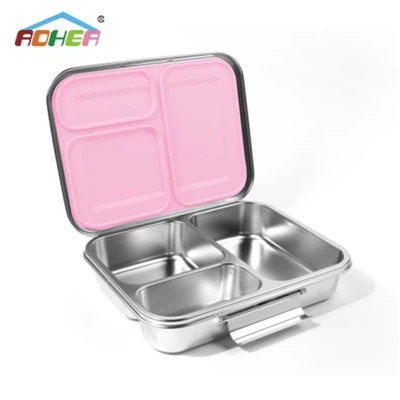
I. Introduction: Why Lunch Box Material Upgrades Have Become a Brand Consensus
As consumer awareness around food safety, health, sustainability, and product quality continues to rise, lunch boxes are no longer viewed as simple food containers. Instead, they have become products closely tied to lifestyle choices and brand identity.
While traditional PP (polypropylene) lunch boxes are still widely used across the market, an increasing number of mid-range and premium brands are shifting toward Tritan material. This transition is not accidental. It is driven by a combination of stricter safety standards, evolving user expectations, brand positioning strategies, and intensifying market competition.
To understand this shift more clearly, it is necessary to start from the materials themselves.
II. Material Fundamentals: The Essential Differences Between Tritan and PP
Before discussing brand strategy and consumer preference, it is important to clearly define what PP and Tritan are, and how they differ at a material level.
2.1 What Is PP (Polypropylene)?
PP is one of the most widely used food-grade plastics on the market. It is valued for several practical advantages:
Low cost
Good heat resistance (microwave-safe)
Lightweight
Because of these characteristics, PP is especially suitable for mass-market and price-sensitive products. However, in terms of appearance, long-term user experience, and premium brand perception, PP has certain limitations.
2.2 What Is Tritan?
Tritan is a high-performance copolyester material developed by Eastman. It is well known for:
BPA-Free
High transparency
High impact resistance
Tritan is widely used in premium water bottles, baby products, and health-focused lifestyle items, and has gradually become synonymous with "safe and premium plastic."
III. Why Are More Brands Choosing Tritan Instead of PP?
Based on the material differences above, the growing preference for Tritan among brands can be explained from several key perspectives.
3.1 Stronger Food Safety Messaging and Brand Trust
Although food-grade PP is inherently safe, many consumers still have psychological concerns about "plastic."
Tritan offers clear advantages:
Explicit BPA-Free labeling
Easier compliance with strict international food-contact standards such as FDA and LFGB
For brands, this means simpler safety communication, lower education costs, and stronger consumer trust.
3.2 Higher Transparency Improves Product Aesthetics and Display Value
PP lunch boxes are typically:
Semi-transparent or opaque
Prone to whitening and aging over time
Tritan, by contrast:
Has glass-like clarity
Maintains transparency even after long-term use
For brands, this leads to:
Better e-commerce images
More attractive shelf presentation
Clearer food visibility, increasing purchase intention
3.3 Better Impact Resistance and Durability Reduce After-Sales Risk
Tritan significantly outperforms standard PP in impact resistance:
Less likely to crack
Less stress whitening after drops
More suitable for children, students, and outdoor use
For brands, this translates into:
Lower return rates
Fewer customer complaints
More stable long-term product reputation
3.4 Better Alignment with Mid- to High-End and Eco-Conscious Brand Positioning
Consumers often associate Tritan with:
Premium quality
Health awareness
Environmental responsibility
Choosing Tritan lunch boxes helps brands:
Elevate product positioning
Support higher retail pricing
Align with "healthy lifestyle" and "eco-friendly" brand values
This is especially important for brands seeking differentiation rather than price competition.
IV. From the Consumer's Perspective: Why End Users Prefer Tritan
4.1 A Glass-Like Experience with Greater Safety
Tritan offers the visual clarity of glass without the fragility risk. This makes it more acceptable both visually and psychologically, especially for:
Office lunches
Student meals
Children's food storage
4.2 Odor-Free and Stain-Resistant for Long-Term Use
After extended use, PP lunch boxes may develop:
Food odors
Sauce staining
Tritan performs better in resisting oil absorption and staining, meaning it looks newer for longer, which directly affects repurchase rates and word-of-mouth reputation.
V. Cost and Pricing: Is Tritan Always More Expensive?
From a raw material perspective, Tritan does cost more than PP. However, brands focus more on:
Per-unit premium potential
Lifecycle cost (returns and complaints)
Long-term brand value
For mid- to high-end markets, higher material costs often lead to higher profit margins and stronger competitiveness.
VI. Which Brands Are Best Suited for Tritan Lunch Boxes?
Tritan is particularly suitable for brands that:
Emphasize food safety and health
Focus on baby, student, or family products
Operate in cross-border or Western markets
Aim for mid- to high-end positioning and avoid price wars
PP remains suitable for:
Promotional items
Entry-level, high-volume markets
The two materials are not competitors, but serve different positioning needs.
VII. Conclusion: Tritan Is Not Replacing PP - It Represents a Brand Upgrade
Looking at Tritan and PP across material performance, consumer perception, brand positioning, and cost structure, one conclusion becomes clear:
The shift toward Tritan is not because PP is inadequate, but because the market is evolving.
PP continues to be a practical and reliable option for entry-level and price-sensitive products. However:
The market is upgrading
Consumers are changing
Brands need clearer value communication
Today's consumers care not only about whether a lunch box works, but also about safety perception, durability, long-term appearance, and lifestyle alignment. Material choice has become part of the brand story.
Tritan represents higher standards, stronger trust, and a better user experience. It supports premium design, reduces long-term risk, and enables more confident pricing.
Tritan is not a replacement for PP, but a strategic upgrade choice for brands moving from price competition to value-driven growth.


